 Nozaninbegim Mamurjonova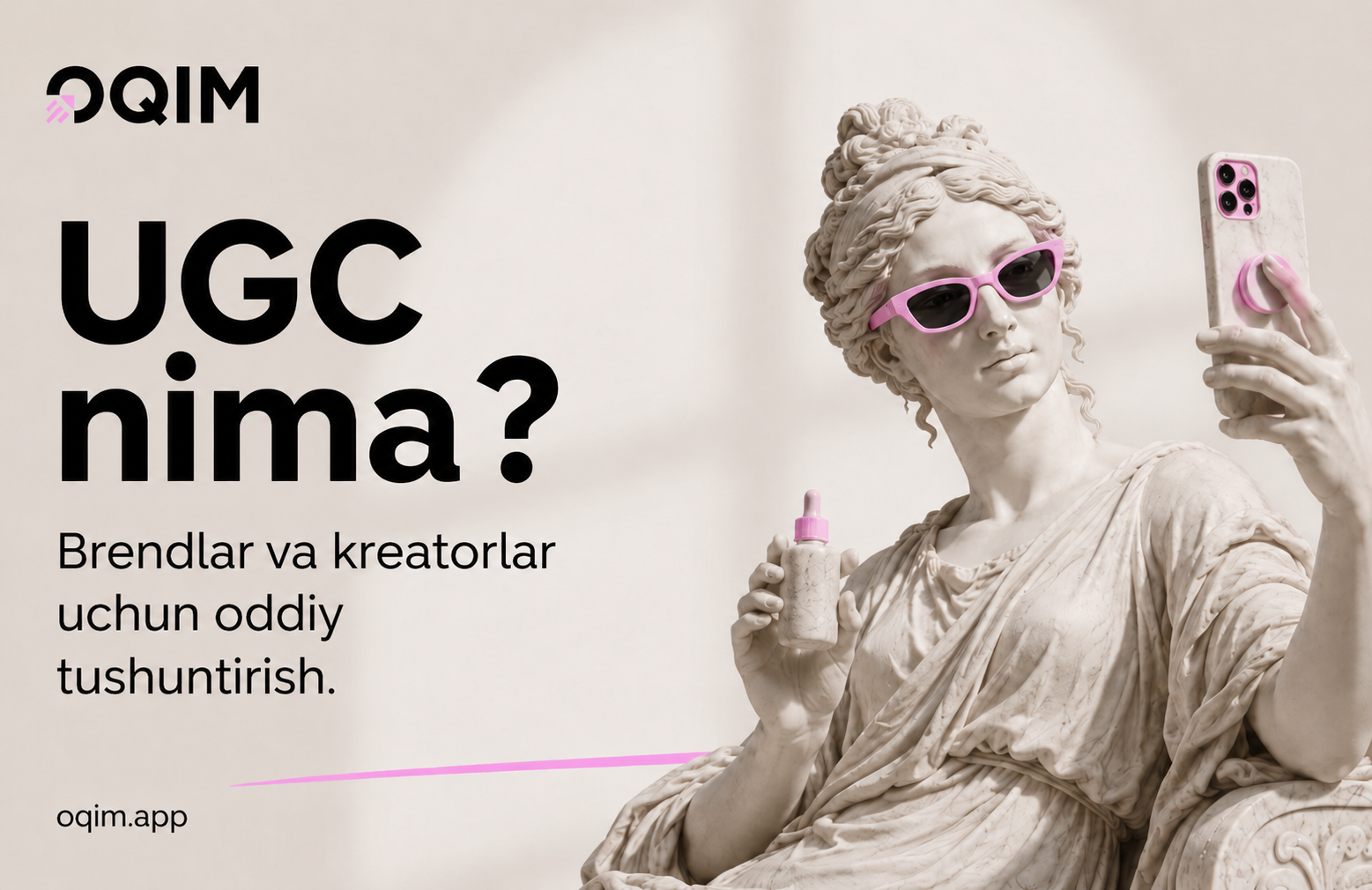
UGC stands for User Generated Content: content made by an ordinary user or a creator rather than by the brand. A Reel about a product, a comment, a review, an unboxing video or a simple recommendation — all of it counts as UGC.
Over the last two years this acronym has moved to the centre of marketing conversations. The reason is simple: people trust other people, not ads. According to a 2021 Nielsen study, 88% of respondents worldwide trust a recommendation from someone they know more than any other advertising channel.
Behind that number is a situation we all recognise. When choosing a new phone, a face cream or a café, we rarely remember the ad banner. We remember what a friend said, or the video an ordinary person posted on Instagram. UGC translates exactly that trust into the language of marketing.
What types of UGC are there?
There are two main kinds.
Organic UGC is content nobody asked for. You went to a new café, liked the food and posted a Reel. The brand did not commission it; you simply shared your experience.
Commissioned UGC is content a brand pays a creator to make. The creator tries the product, shows how it works and explains it in plain language. The brand then uses the video on its own page or in its ads.
The power of both lies in one thing: the content looks like the feed people scroll every day, not like a commercial.
What does UGC look like?
UGC is not a single format. Its most common forms are familiar to everyone.
Personal experience — the creator tells how they found the product, why they chose it and what changed afterwards. This is the most natural format because it feels like an ordinary conversation.
Tutorial — a step-by-step demonstration of how the product is used. It works especially well for cosmetics, kitchen appliances and apps.
Unboxing — opening the package. The viewer feels as if they were holding the product in a shop.
“Problem and solution” — first a familiar problem is shown, then how the product solves it. One of the fastest formats to grasp in a short video.
“Before and after” — showing the result visually. Very strong for skincare, cleaning products and fitness.
Which format to pick depends on the product. But one thing unites them all: the video is shot by a real person in real conditions.
How is UGC different from influencer marketing?
In influencer marketing a brand buys two things: the content and the blogger’s audience. In UGC it often buys only the content itself.
In practice the difference looks like this: an influencer posts the video on their own page, while a UGC creator hands the video to the brand and the brand distributes it.
That is why you do not need hundreds of thousands of followers to be a UGC creator. What matters more is looking natural on camera, speaking clearly and being able to produce a quality video.
In practice the two models often blend. For example, a creator posts the video on their own page, but the brand pays for the video’s results rather than for the follower count. Then the key measure is not audience size but how much, and how well, the video was watched.
Why are brands moving to UGC?
First, trust. A video shot on a phone in a real person’s hand often performs better than a flawless studio commercial.
Second, speed and volume. Instead of one big production, a brand gets dozens of variations from dozens of creators and tests which one works.
Third, cost. UGC is usually noticeably cheaper than traditional video production.
Fourth, the chance to test. Ten creators make ten videos about one product with ten different openings, tones and arguments. The brand sees which approach lands with its audience through results, not guesswork.
The trend is global. According to Influencer Marketing Hub’s 2026 report, half of the brands surveyed plan to expand their work with UGC creators.
How does UGC work in Uzbekistan?
The UGC market in Uzbekistan is only now taking shape. Brands are looking for natural content, and creators are looking for a steady income from what they make. The problem is usually not quality but process.
Where does a creator find a brand? How is the price agreed? Who approves the video? When does payment arrive? How are results measured? Most collaborations stall on exactly these questions.
Yet the ground is ready. According to DataReportal, as of October 2025 Instagram ads reached 14.1 million people in Uzbekistan, more than half of the adult population. And in February 2026 blogger advertising was included in the country’s GDP figures for the first time: the market was valued at UZS 760.2 billion for 2025.
So both the audience and the money are there. What is missing is a system that connects brands and creators through an orderly, understandable process.
The limits of UGC
UGC is not a magic wand. Not every video works. Some get far more views than expected, others go almost unnoticed. That is why you should rely on several videos rather than one.
Quality varies too. Creators differ in experience, style and equipment. A clear brief and approving the video before it is posted narrow that gap considerably.
Most important of all is honesty. The power of UGC is trust, and trust rests on honesty. If a creator has not genuinely tried the product, or hides that it is an ad, viewers notice quickly and the whole advantage of UGC disappears.
How to get started with UGC
For a brand, the first step is a clear brief: the product, the goal, the budget and the expected result.
A good brief is short. It states what the product is, which key message the video must carry, what to avoid and how long the video should be. Leave the rest to the creator: the power of UGC is precisely in their own style.
For a creator, the first step is a few sample videos. Show a product in use, talk in a problem-and-solution format, share your own experience.
You do not need to wait for a brand order to make videos like these. You can start with any product in your home. Three to five videos become a portfolio, and that is exactly what a brand will judge you on.
OQIM brings these two sides together in one place. The brand creates an ad campaign, creators apply, the content is approved, views are tracked and payouts stay transparent.
UGC is not a passing trend but a change in how advertising works. And there is no need to wait for that change.
Create your profile on OQIM and start working with UGC today.