 Nozaninbegim Mamurjonova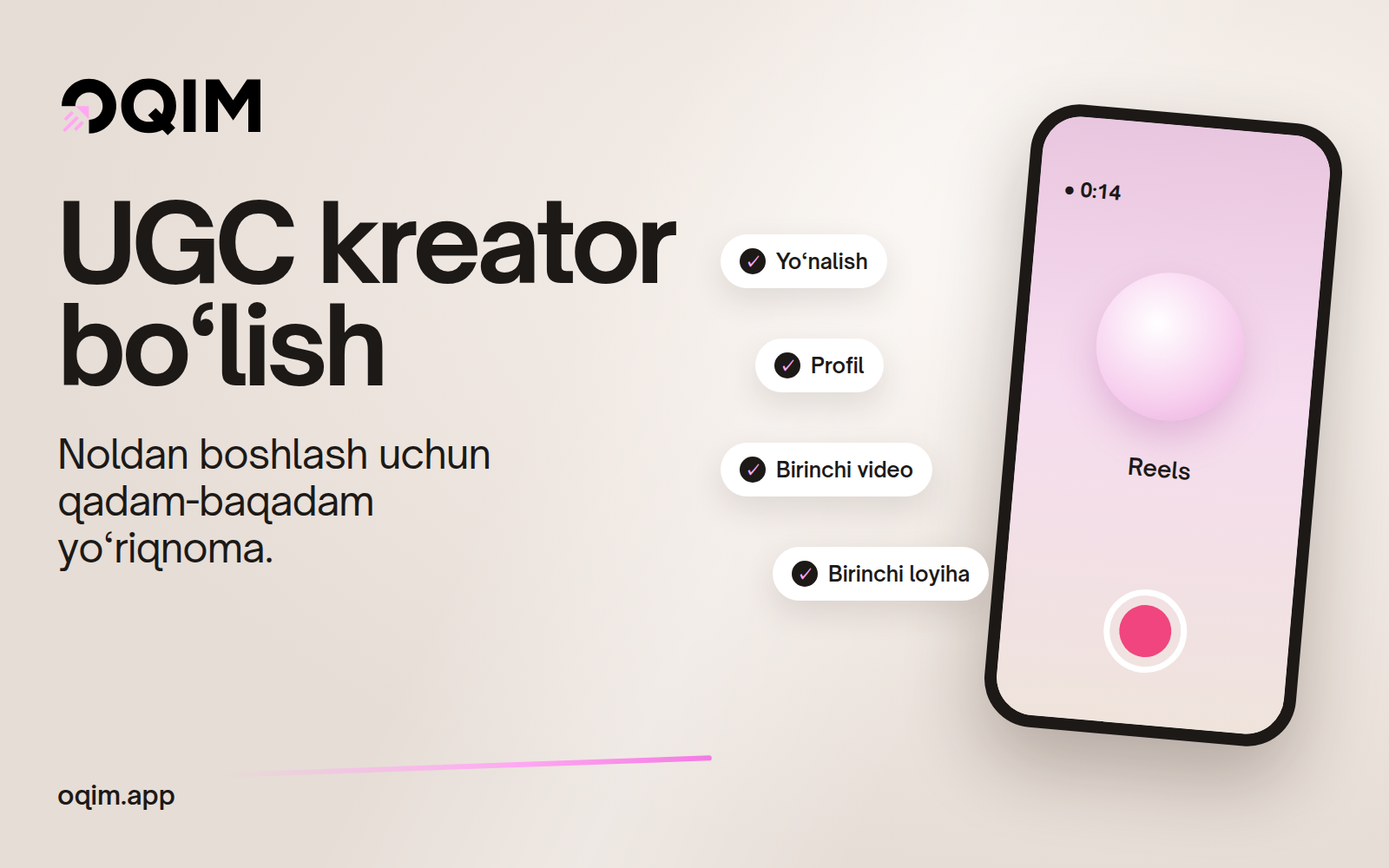
You open Instagram in the morning. A video comes up of a girl applying cream to her face. No studio, no expensive lights, an ordinary bathroom in the background. She shows how she uses the cream, says what changed in two weeks and ends the video. You watch it to the end and do not even notice it was an ad.
That is UGC. And the person who made it is a UGC creator.
A few years ago there was only one route to working with brands: build a big audience and wait for an offer. Today that route is no longer the only one. Brands are now willing to pay not just for follower counts but for videos people want to watch. That opens the door to anyone with a phone and an idea.
But an open door does not tell most people how to walk through it.
Who is a UGC creator?
UGC stands for User Generated Content: content made by an ordinary person rather than by the brand. If the term is new to you, read our article on what UGC is first.
A UGC creator is someone who makes videos in that natural style for brands. They try the product, show how it works and describe their own experience in plain language. The result looks like the content people see in their feed every day, not like a commercial.
The difference from a blogger is that a brand usually pays a blogger for their audience: “my followers will see you”. With a UGC creator the main value lies elsewhere, in the video itself. The better a video holds attention and the more trust it builds, the more valuable the creator.
Why do brands pay for this?
The reason is simple: people trust people, not ads. In a 2021 Nielsen survey, 88% of respondents said they trust recommendations from people they know more than any other advertising channel. A UGC video delivers exactly that feeling. Someone watching it does not think “this company wants to sell me something” but “this person has actually tried it”.
The second reason is speed. The Instagram feed refreshes every day and a single video goes stale within a week or two. A brand needs new videos every week, each with a different angle. Shooting one big commercial takes a script, a studio, a camera operator and editing. Getting ten different videos from ten creators is often cheaper and faster.
This is not just the situation in Uzbekistan. According to Influencer Marketing Hub’s 2026 report, half of the brands surveyed plan to expand their work with UGC creators.
What do you need to start?
Far less than most people think.
The camera on any mid-range smartphone from the last few years is more than enough for Reels. The best light is daylight from a window. Let it fall on your face from the front, not from behind. A basic microphone is enough for sound. Viewers forgive a slightly soft picture, but they do not forgive speech they cannot hear. For editing, CapCut or Instagram’s own editor is enough.
More important than equipment is skill. Making a point briefly and clearly, showing a product naturally, holding the viewer from the first seconds. No course teaches these fully. Only practice does.
Your profile is your portfolio
A UGC creator has no CV. Their Instagram page takes its place.
When a brand opens your page it decides within seconds. So tidy up your profile in advance. Use a clear, well-lit profile photo. Say briefly in your bio who you are and what you make content about. Pin your three best Reels to the top of the page. The account must be public: neither a brand nor a platform can see a private page.
Choosing a niche matters too. Brands remember a creator who works in beauty, food, tech, sport or parenting far faster than one who talks about everything. One or two niches are enough. You can widen them later.
What if no brand has written to you yet?
This is the question beginners ask most. The answer is simple: you do not need to wait for an order.
Take any product in your home — a cream, coffee, headphones or a book — and make a video about it as if a brand had commissioned it. In one, share your personal experience. In the next, show the product in use. In another, use the problem-and-solution format: first show the problem, then how the product solves it. Unboxing, “before and after” or comparing two products work well too.
After three to five videos like this, two things happen. First, you have work to show in a portfolio. Second, you notice for yourself which style suits you. Some people are strong at storytelling on camera; others make great videos with only hands and voice.
The first three seconds
In short video the most valuable time is the first few seconds. That is when the viewer decides whether to keep watching or skip.
A video that opens with “Hi, today I want to tell you about a product…” usually does not survive those three seconds. The viewer swipes away. Opening with a question, an unexpected shot or the result itself works much better. A question like “Do you also run out of time in the mornings?” pulls the viewer in. Showing two weeks ago and today side by side sparks curiosity.
This is exactly the ability brands look for: can you hold the viewer?
What does Instagram like?
Instagram does not hide its rules. Since 2024 the platform has recommended original content more. Reposts of someone else’s video, or videos carrying another app’s logo or watermark, are not recommended to people who do not follow you. Your own logo is not a problem. So shoot the video yourself and edit it yourself.
Reels can now be up to three minutes long, but for ad videos brevity still wins. If what you have to say fits in 30 seconds, do not stretch it to a minute.
Another useful tool is trial reels. They are shown first to people who do not follow you. They are a convenient way to test a new style without tiring your followers.
The brief: a common language with the brand
When the first order arrives you are given a brief. The brief is the brand’s assignment: what to show, which message must be included, what to avoid and how long the video should be.
An experienced creator reads the brief carefully and delivers the assignment precisely without losing their own style. Beginners often stumble right here. The brief is skimmed, the message that matters most to the brand is left out, and the video comes back for rework. A video sent back once is lost time.
A simple habit helps: before shooting, write the brief’s key message down in one sentence. When the video is done, check that the sentence is in it.
Where do you find the first order?
For most people this is the hardest stage. You can write to brands yourself, but replies are rare and agreeing a price is harder still. When is payment due? How are results measured? What happens if they do not like the video? Nobody usually answers these questions clearly, and many collaborations die in a DM thread.
On OQIM this process is built differently. You see ready ad campaigns, read their terms and join. You make the video to the brief and upload a draft. The brand reviews it and either approves it or leaves comments. You post the approved video as a Reel. Views are counted automatically.
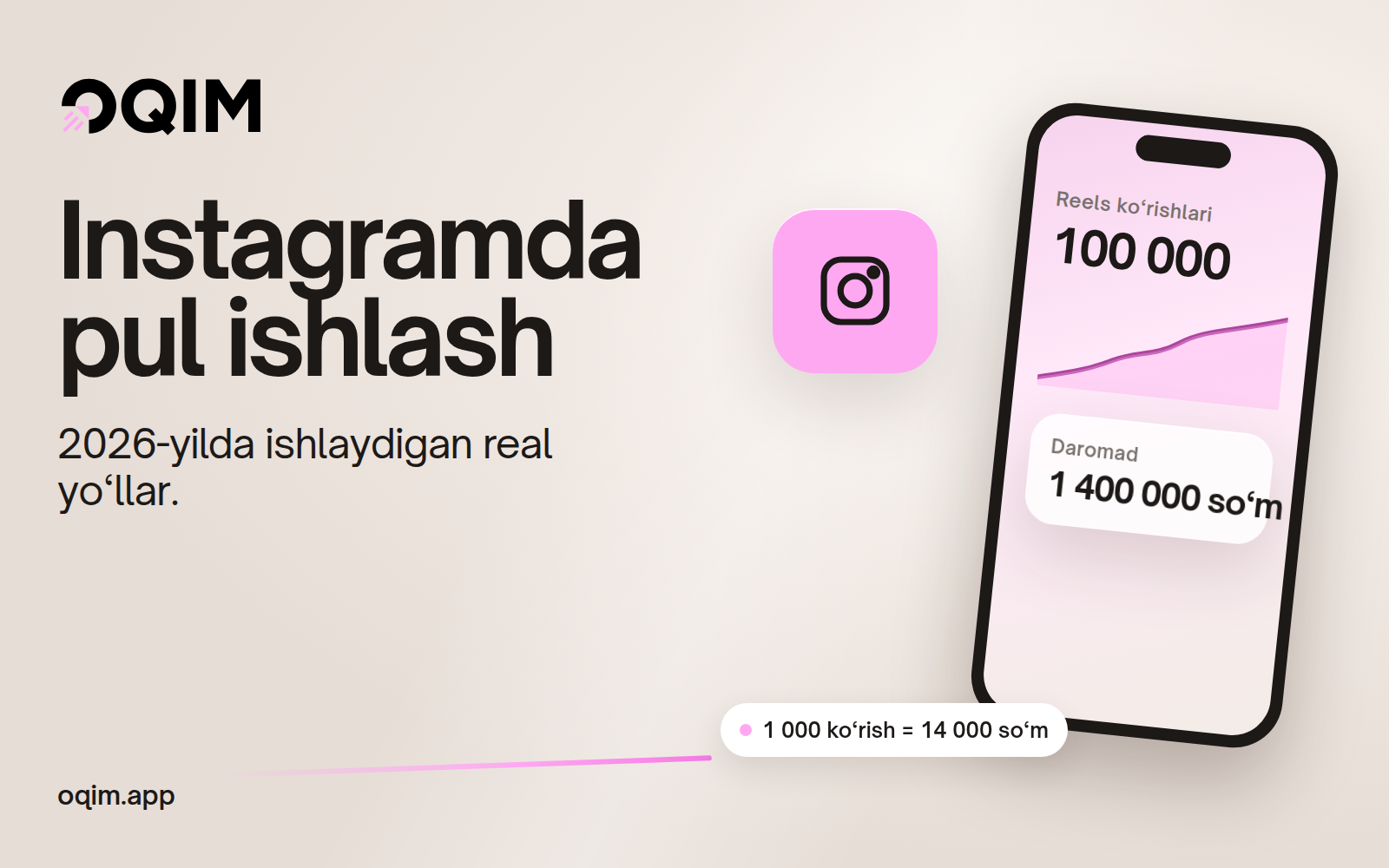
Payment is for views, not for the video. The minimum creator rate is UZS 14,000 per 1,000 views, and each campaign’s exact rate is stated on its page. At the minimum rate, for example, 50,000 views come to UZS 700,000 and 100,000 views to UZS 1,400,000. Once the campaign ends and a 7-day verification period passes, the money is sent to your card.
The logic of this model is simple. The better your video, the more people watch it and the more you earn.
Where do beginners go wrong?
The most common mistake is making the ad too much of an “ad”. A memorised script, an artificial tone and over-the-top praise lose trust instantly. The power of UGC is in being natural. Tell the camera the way you would tell a friend.
The second mistake is neglecting sound. However beautiful a video shot on a windy street or in a noisy café is, if it cannot be heard it will not be watched.
The third is stopping after the first result. It is normal for the first videos not to get the views you hoped for. Growth in UGC is about gaining experience and making each video a little better than the last.
Who is this for?
If you post on Instagram regularly, speak freely on camera or simply know how to make a good video, UGC is for you. To work through OQIM your Instagram account needs at least 1,000 followers. After that it is the quality of your videos, not your follower count, that sets you apart.
Most people start UGC as extra income alongside work or study. Depending on experience, one video takes anywhere from an hour or two to a day to make.
Being a UGC creator is a skill, not fame. And it grows with every new video.
Create your profile on OQIM and start your first ad campaign today.